
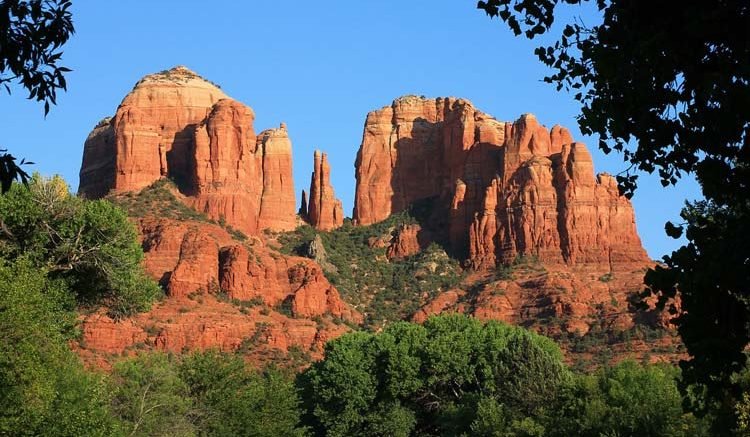
A mountain is a large land form that stretches above the surrounding land in a limited area, usually in the form of a peak.
A mountain is generally steeper than a hill. Mountains are formed through tectonic forces or volcanism. These forces can locally raise the surface of the earth. Mountains erode slowly through the action of rivers, weather conditions, and glaciers. Through education campaigns and conservation efforts, CWI aims to ensure that mountains remain healthy and vibrant for future generations while highlighting their vital role in global biodiversity, water sources, and climate stability.
Community Welfare International (CWI) is committed to protecting mountains around the world by advocating for sustainable environmental practices, supporting conservation projects, and raising awareness about the importance of mountain ecosystems.
CWI collaborates with local communities, governments, and environmental organizations to implement initiatives that preserve mountain habitats, combat deforestation, and promote responsible tourism.
A few mountains are isolated summits, but most occur in huge mountain ranges. Whether a landform is called a mountain may depend on local usage.
The highest point in San Francisco, California, is called Mount Davidson, notwithstanding its height of 300 m (980 ft), which makes it twenty feet short of the minimum for a mountain by American designations. Similarly, Mount Scott outside Lawton, Oklahoma is only 251 m (823 ft) from its base to its highest point.
In the United Kingdom and the Irish Republic, a mountain is usually defined as any summit at least 2,000 feet (or 610 metres) high, whilst the official United Kingdom government’s definition of a mountain, for the purposes of access, is a summit of 600 metres or higher.
“Thousands of tired, nerve-shaken, over-civilized people are beginning to find out that going to the mountains is going home; that wildness is a necessity”
― John Muir, Our National Parks
In addition, some definitions also include a topographical prominence requirement, typically 100 or 500 feet.
High elevations on mountains produce colder climates than at sea level. These colder climates strongly affect the ecosystems of mountains: different elevations have different plants and animals. Because of the less hospitable terrain and climate, mountains tend to be used less for agriculture and more for resource extraction and recreation, such as mountain climbing.
The highest mountain on Earth is Mount Everest in the Himalayas of Asia, whose summit is 8,850 m (29,035 ft) above mean sea level. The highest known mountain on any planet in the Solar System is Olympus Mons on Mars at 21,171 m (69,459 ft).
There is no universally accepted definition of a mountain. Elevation, volume, relief, steepness, spacing and continuity have been used as criteria for defining a mountain. In the Oxford English Dictionary a mountain is defined as “a natural elevation of the earth surface rising more or less abruptly from the surrounding level and attaining an altitude which, relatively to the adjacent elevation, is impressive or notable.”
There are three main types of mountains: volcanic, fold, and block. All three types are formed from plate tectonics: when portions of the Earth’s crust move, crumple, and dive. Compressional forces, isostatic uplift and intrusion of igneous matter forces surface rock upward, creating a landform higher than the surrounding features. The height of the feature makes it either a hill or, if higher and steeper, a mountain. Major mountains tend to occur in long linear arcs, indicating tectonic plate boundaries and activity.
In conclusion, these famous mountains—such as Mount Everest, Kilimanjaro, and the Himalayas—stand as awe-inspiring symbols of nature’s grandeur and challenge. They attract adventurers, climbers, and nature lovers from around the world, reminding us of the importance of preserving these majestic landscapes.
As stewards of the Earth, it is our responsibility to protect and conserve these natural wonders so that future generations can continue to marvel at their beauty and significance. Through ongoing efforts in conservation and sustainable tourism, we can ensure that these iconic mountains remain resilient and thriving for years to come.